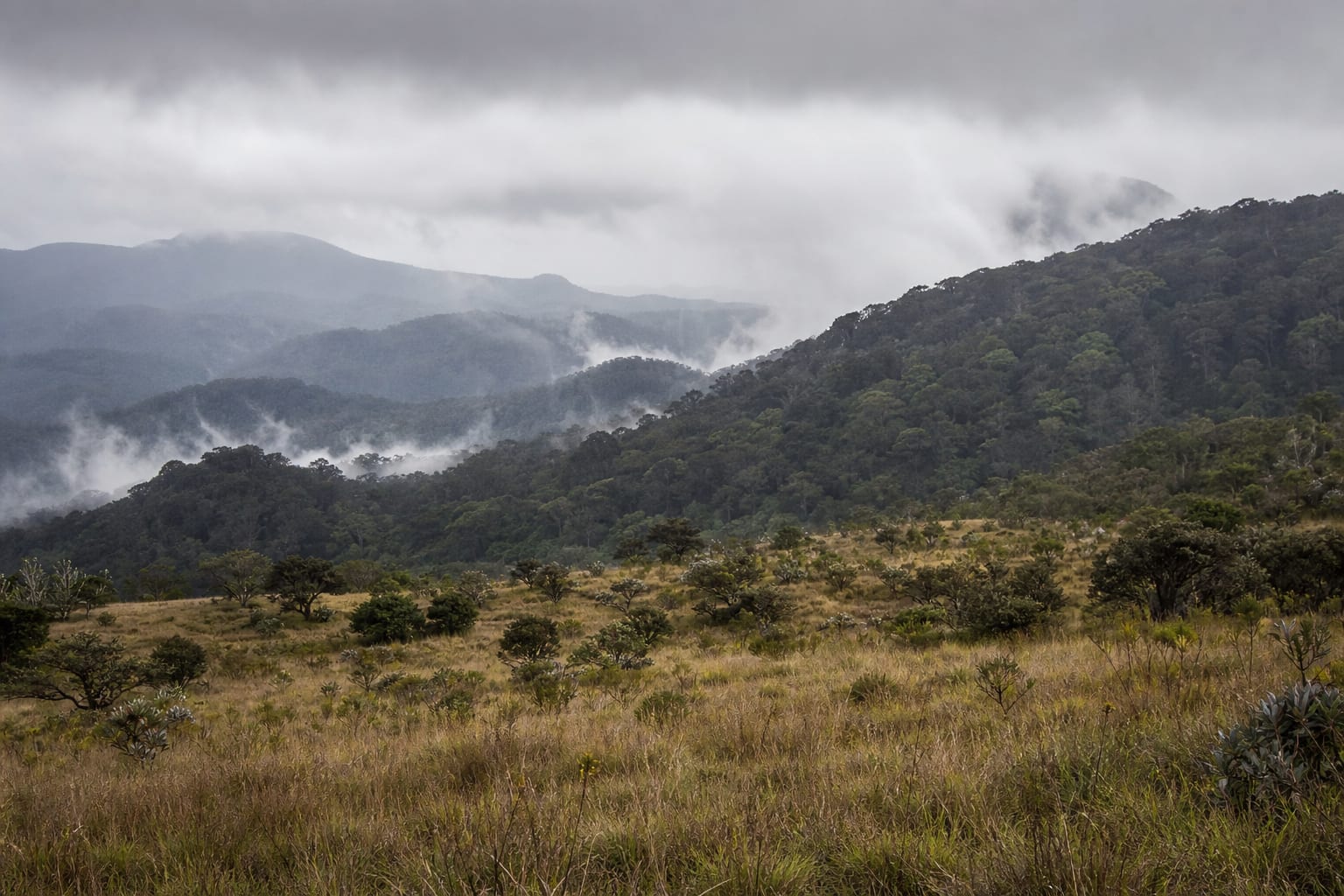
The World's End view at Horton Plains is gone by mid-morning most days. Here is the circuit, the timing, and what the cloud does.
The single fact that determines whether a trip to Horton Plains National Park is worth the effort is the time you arrive at World's End. Get there before the cloud comes up the escarpment and you are standing at the top of an 880-metre drop with half the southern island laid out underneath. Get there at eleven and you are looking at a wall of white, which is what happens to a sizeable share of visitors.
This is not a hike where an early start is a nice idea. It is the entire proposition.
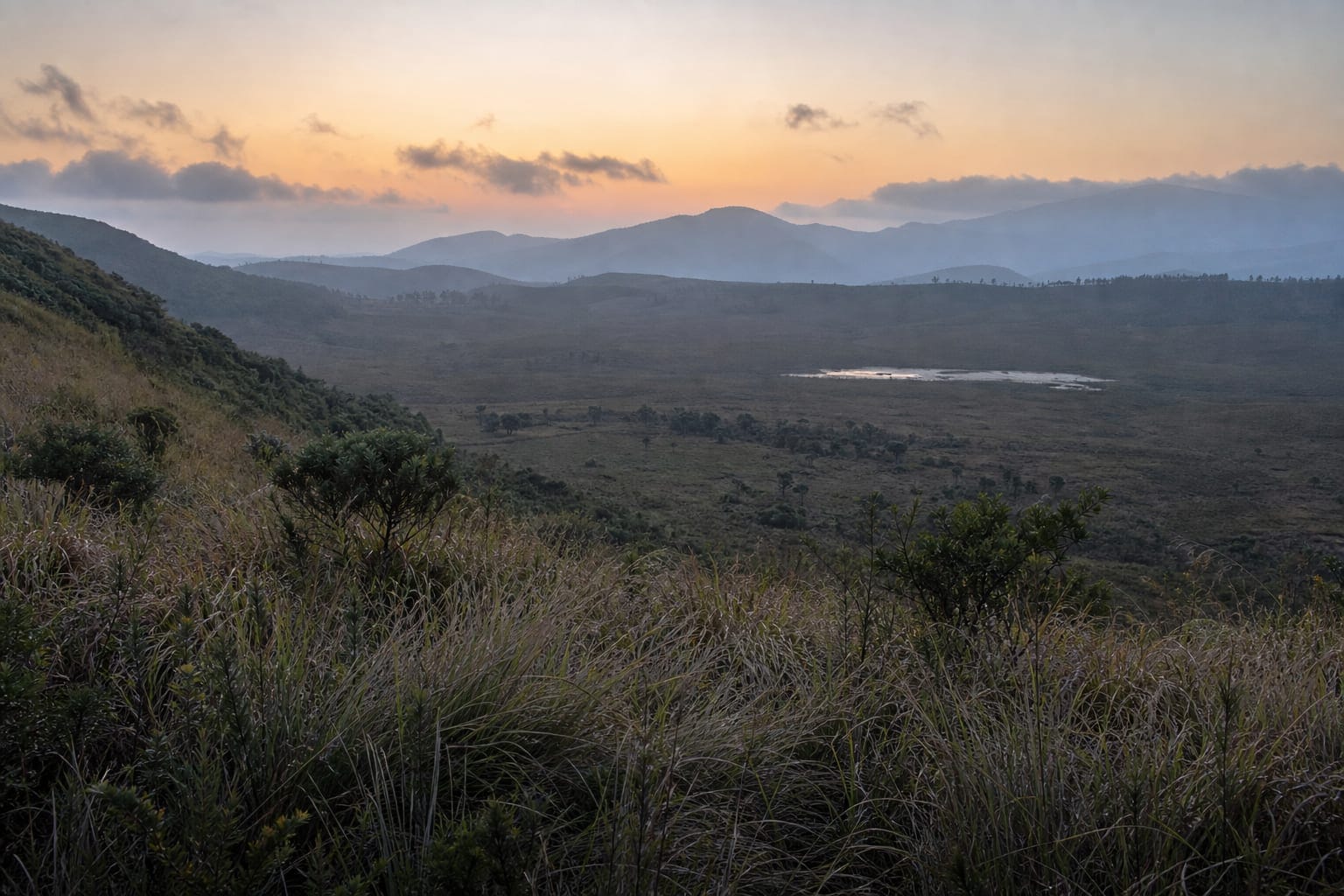
The plateau itself is unlike anywhere else in Sri Lanka — high montane grassland at over 2,000 metres, cut with patches of cloud forest, cold enough at dawn to see your breath. It is part of the Central Highlands UNESCO World Heritage listing, and it feels much less tropical than anything you will have driven through to get there.
What is the World's End walk?
A circular trail of roughly nine to ten kilometres that takes in Small World's End, World's End proper, and Baker's Falls, then loops back across the grassland to the entrance. Most people walk it in three to four hours at an unhurried pace.
It is not a hard walk. The ground is mostly level or gently rolling, the path is clear throughout, and the altitude is the only real physical factor. What it demands is starting time, not fitness.
Walk the loop clockwise, taking World's End first and Baker's Falls on the way back. Everyone who tells you this is right, and the reason is the cloud: the falls look the same at ten in the morning as they do at seven, and the viewpoint does not.
What time should you arrive?
At the gate when it opens, which in practice means leaving Nuwara Eliya in the dark. From the entrance it is roughly an hour of walking to World's End, so an early gate time puts you at the edge while the air is still clear.
The pattern is consistent through most of the year: clear at dawn, cloud building up the escarpment from the lowlands through mid-morning, the view gone somewhere between nine and ten. On a bad day it closes in earlier.
TODO: add the current gate opening time and the entrance fee you actually paid, separating the foreign-visitor rate from the local rate, and note the date. These change and most published figures are stale.
How do you get to Horton Plains?
Two practical approaches, and they suit different trips:
- From Nuwara Eliya, by road, roughly an hour and a half depending on the state of the road. This is what most people do, usually with a driver hired the previous evening who will collect you before dawn.
- From Ohiya station, on the upcountry railway line, which is much closer to the entrance. This suits anyone already travelling the hill country by train and wanting to avoid a long pre-dawn drive.
Note that the railway situation in the highlands has changed since the cyclone — the Kandy end of the upcountry line has not reopened, though the section through Nanu Oya and Ohiya toward Badulla came back in June 2026. Our Kandy to Ella train guide covers what is currently running.
There is no public bus to the park entrance. Whatever brings you also has to wait, which is why the driver-and-wait arrangement is standard.
What will you actually see?
World's End is the escarpment edge where the plateau simply stops and drops away toward the southern plains. On a clear morning the view runs a long way — in the right conditions, all the way to the coast.
Baker's Falls sits in forest on the return leg, reached by a short side path with steps down. Worth the detour, and busier by the time most people get there.
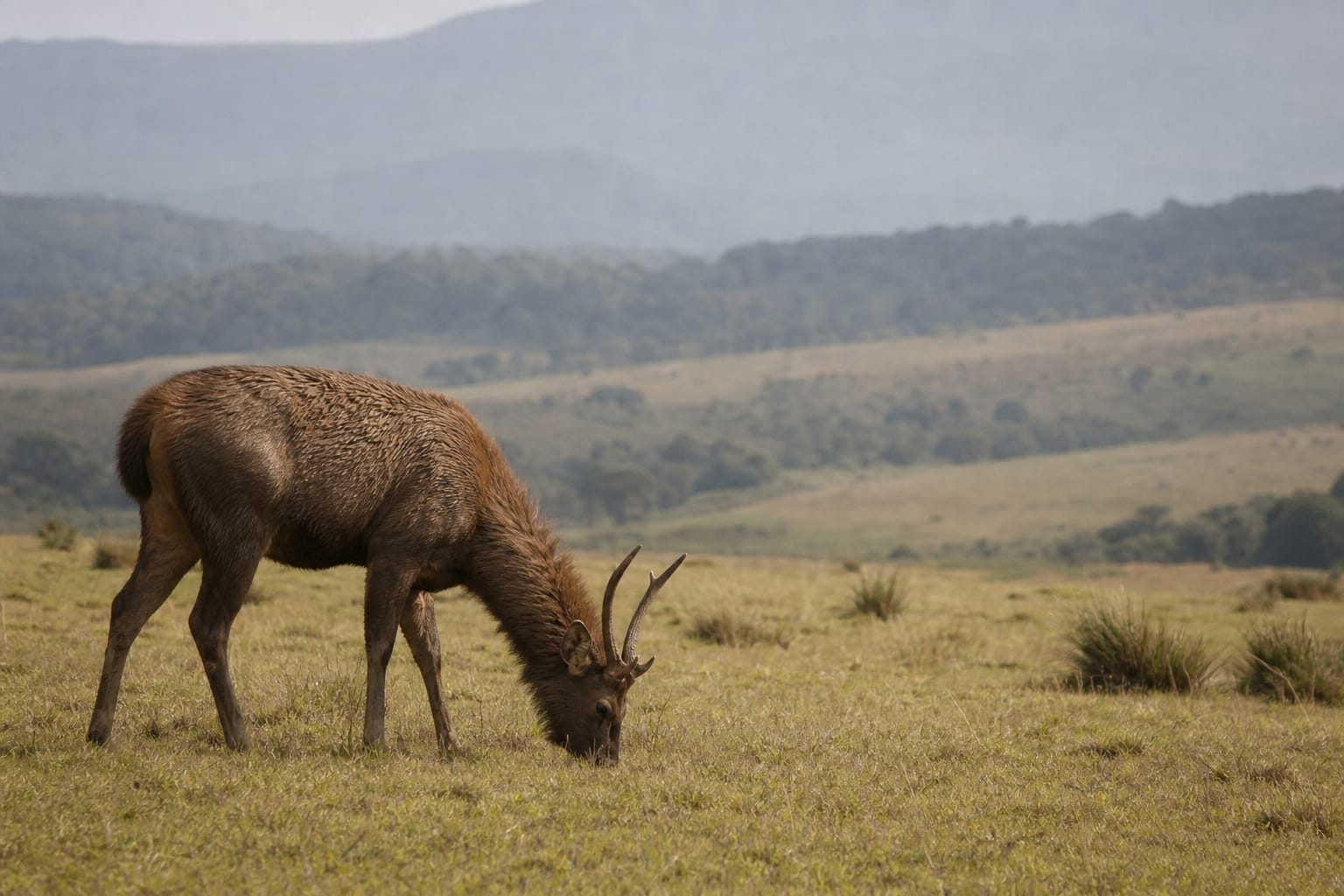
The grassland between them is the part people underrate. Sambar deer are common and often unbothered by walkers. There are endemic birds here you will not see lower down, and the vegetation — stunted, wind-shaped, hung with moss — looks nothing like the rest of the country.
Leopards exist in the park. You will almost certainly not see one.
When is the best time to visit?
January through April gives the clearest and driest conditions and the best odds on the view. From roughly May to September the plateau is often misty and wet, and the World's End window closes earlier and more often.
Whatever the month, the daily pattern holds: dawn is your best chance and it deteriorates from there.
What to know before you go
- Plastic is restricted in the park and bags are checked at the entrance. Decant water into a reusable bottle before you arrive rather than arguing about it at the gate.
- Stay on the marked path. The grassland recovers slowly at this altitude and the erosion from people cutting corners is visible.
- There is no food inside. Eat before, or carry something and take every wrapper back out.
- Do not go near the edge for a photograph. There is no barrier at World's End, the rock is often wet, and the drop is 880 metres.
Set the alarm for a time that feels unreasonable, take a warm layer you think you will not need, and walk the loop clockwise. If you arrive at World's End to find white cloud, wait twenty minutes — it sometimes lifts in gaps, and the second look is often better than the first.