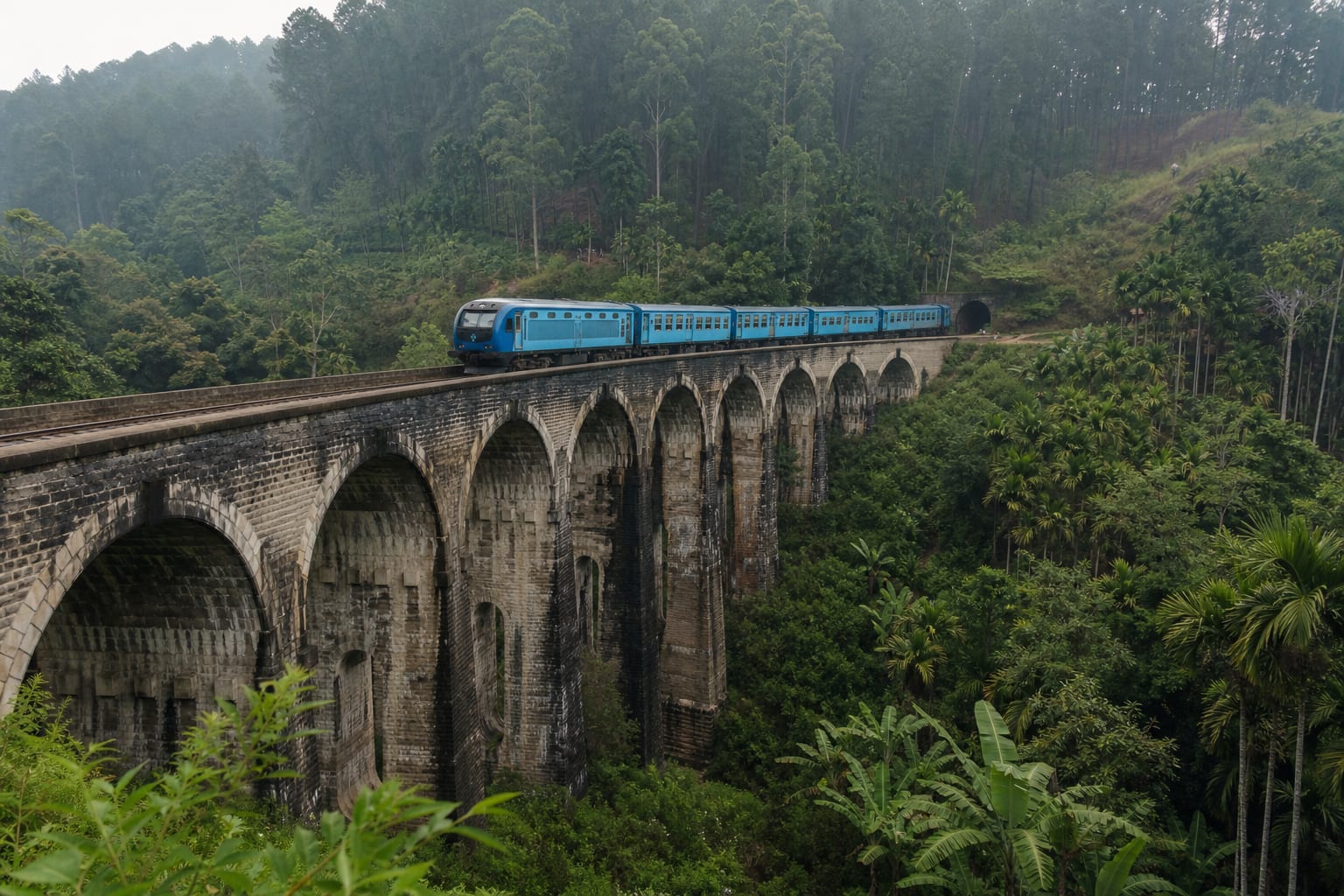
The Nine Arch Bridge is worth the walk, but not at half past nine. Which viewpoint, which path in, and when the crowd arrives.
The Nine Arch Bridge is the single most photographed structure in Sri Lanka and the reason a large share of visitors come to Ella at all. It is genuinely worth seeing. It is also, by mid-morning, a bank of a hundred people holding phones at arm's length waiting for the same train, which is not what the photographs suggest.
The difference between those two experiences is about ninety minutes of sleep.
What time should you go?
Before eight, and ideally before seven. The bank is close to empty at first light, the sun comes in low along the arches from the east, and you can stand underneath the span without queueing for the position.
By nine the tour vans have arrived from Ella and the viewpoints are full. By ten there are vendors, drone operators being asked to land, and a genuine crowd.
The train is the other variable and it is the one nobody can promise you. Six services a day run the Ella–Demodara stretch that crosses the bridge, but the times shift and have shifted repeatedly since the cyclone damage on the upcountry line. Ask at Ella station the afternoon before, or ask your guesthouse — they check often enough to be right.
Which viewpoint is best?
There are three positions people use, and they give completely different photographs:
- Underneath the arches. The most impressive and the least photographed. Standing at the base gives you the full scale of the span and the stonework, and this is where the "no steel" construction actually registers.
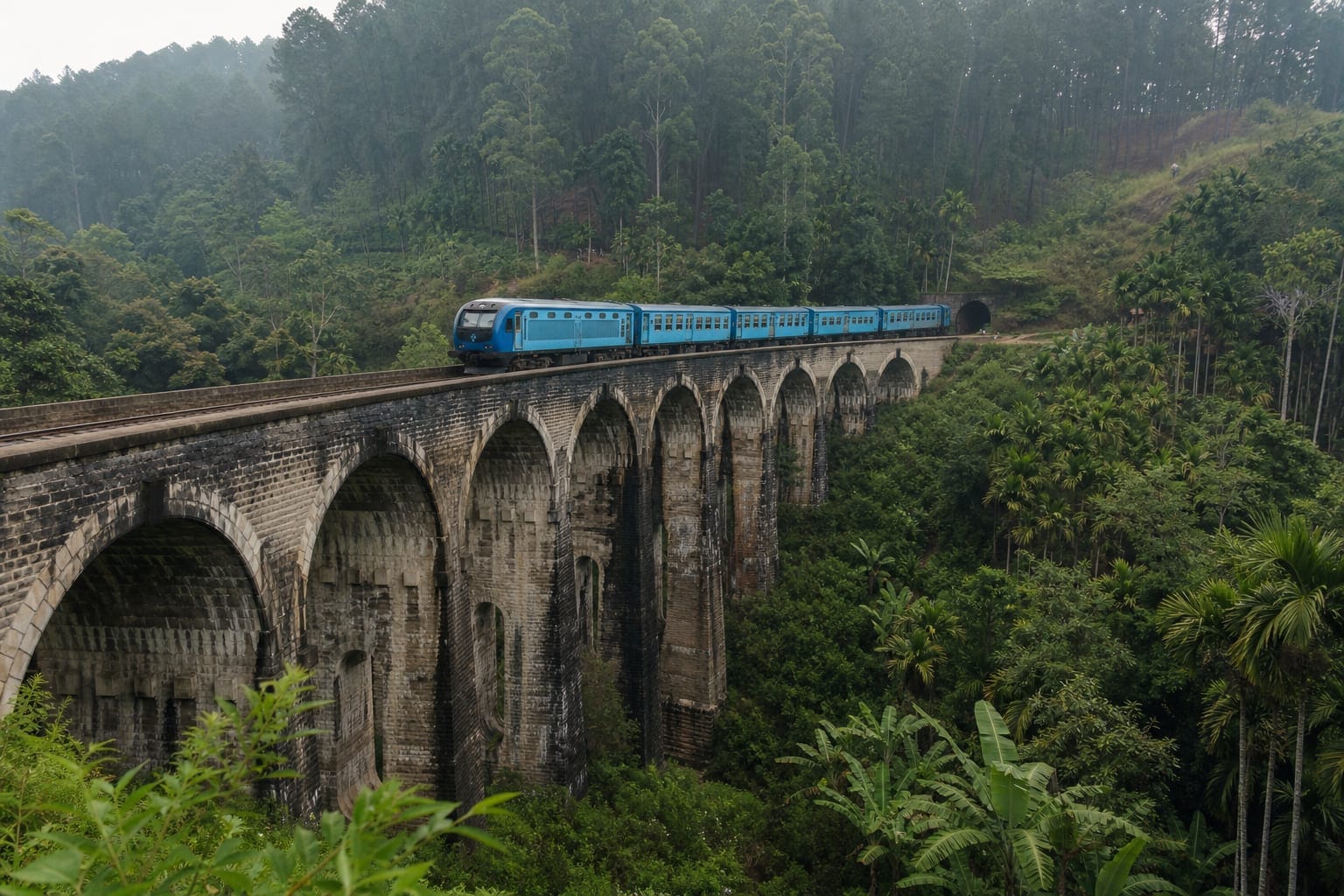
- The ridge on the Ella side, where most of the crowd stands. This is the classic wide shot with the whole bridge and the jungle behind it.
- The tea slope on the far side, reached by continuing past the bridge. Fewer people, and a cleaner angle when the near bank is full.
If you have one visit, walk in along the track, go underneath first, then climb to the ridge for the wider frame.
How do you get there from Ella?
On foot, and it is the better option. The walk from Ella town takes roughly twenty to twenty-five minutes: out along the railway line toward Demodara, then down a footpath through tea and into the gorge.
Walking the track is normal here and locals do it constantly. Trains are slow on this stretch and audible well before they arrive, and you step off. Do not wear headphones.
The other approach is by tuk-tuk to the village of Gotuwala on the far side, which shortens the walk considerably and suits anyone who does not want the climb back up. TODO: add the current tuk-tuk fare from Ella and what you paid.
Coming back is the part people underestimate — it is uphill the whole way and noticeably harder in the middle of the day than at seven in the morning.
Why does the bridge look like that?
It was built during the British colonial period as part of the line up to Badulla, and the detail every guide repeats is that it was constructed without structural steel — the usual story being that steel was diverted to the war effort, leaving the builders to work in stone, brick and cement.
Whether or not that account is exact, the result is the reason it looks the way it does: nine masonry arches carrying a railway across a gorge, with none of the riveted ironwork you would expect from a viaduct of the era. It has been in continuous service for over a century, which is its own argument.
Can you combine it with Little Adam's Peak?
Yes, and it is the standard Ella morning. The two sit on the same side of town and the walk between them takes roughly half an hour, so a reasonable sequence is Little Adam's Peak for sunrise, down and across to the bridge by eight, and back into town for breakfast.
Doing it the other way — bridge first, then the peak — puts you on the climb as the day heats up. Our Little Adam's Peak guide covers the walk itself, and the things to do in Ella guide covers how both fit into a two-day stay.
Is it worth it?
Yes, with the timing caveat that runs through this whole page. Arrive at seven and it is one of the more remarkable pieces of railway engineering you will walk under anywhere. Arrive at ten and you have queued for a photograph that several thousand other people took the same week.
Go early, go underneath, and stay long enough for the second train rather than leaving after the first.